
Before Assembly: What to Check
Checklist Before Actuator Mounting
- →Expose distribution valve: remove handwheel or old actuator — switch off heating beforehand
- →Check thread: Standard M30×1.5 (compatible with E30NC-230). Measure outer diameter 30 mm with tape measure or caliper.
- →Measure the voltage at the distribution box: 230V = standard for living areas; 24V = mandatory for wet rooms (VDE 0100)
- →Prepare 3×0.75 mm² cable: L (Phase), N (Neutral), PE (Earth) for each actuator
- →Have an open-end wrench SW 30 or a flush-mounted socket wrench ready for assembly
NC vs. NO & 24V vs. 230V: System Overview
The crucial difference between NC (Normally Closed) and NO (Normally Open) lies in their behavior during a power outage: NC actuators automatically close the valve when there is no power – this is the safety standard for underfloor heating, because in the event of a defect, the heating circuit does not remain permanently open and overheat. NO actuators, on the other hand, remain open during a power outage – only sensible in special applications (e.g., cooling systems).
NC vs. NO & 24V vs. 230V in direct comparison
| Property | NC (Normally Closed) | NO (Normally Open) |
|---|---|---|
| Behavior when unpowered | Valve closed (safe) | Valve open (overheated) |
| Application UFH | ✓ Yes Standard | ✗ No Not recommended |
| Application Cooling | ○ Limited Only with bypass | ✓ Yes Suitable |
| Engo Model | E30NC-230 / E30NC-24 | — (ENGO does not carry an NO model) |
| Opening Time | 3–4 minutes (thermal) | 3–4 minutes |
| Closing Time | 3–4 minutes | 3–4 minutes |
| Voltage | When | ENGO Model | Suitable Control Box |
|---|---|---|---|
| 230V | All living spaces (Standard) | E30NC-230 | ECB8-230V, ECB62-ZB |
| 24V | Bathrooms, wet rooms (VDE mandatory) | E30NC-24 | ECB8-24V |
| 24V | If 24V control box is available (old system) | E30NC-24 | ECB8-24V |
E30NC-230 Technical Data
- Thread: M30×1.5 — fits all common heating manifold distributors (Rehau, Uponor, Emmeti, Kermi, Meibes)
- Voltage / Power: 230V AC / 1 W standby current, 2 W when opening
- Opening/Closing time: 3–4 minutes (thermal actuator, silent)
- Closing force: 100 N — sufficient for all standard UFH valves
- Protection class: IP30 — for dry manifold rooms; for wet rooms use IP54 variant
- Temperature range: 5–50 °C ambient temperature
- Cable connection: 3×0.75 mm² stranded wire, 1.5 m cable
- Warranty: 5 years (ENGO standard)
M30×1.5 Compatibility — which distributors fit?
M30×1.5 is the dominant thread format for UFH manifold valves in Germany:
- Directly compatible (no adapter): Rehau, Uponor, Emmeti, Giacomini, Kermi, Meibes, Purmo, Oventrop (newer models), Viega Fonterra
- M28×1.5 adapter needed (approx. €2): Danfoss RA valves (older series), Oventrop Uni LD/LH
- 1/2 inch adapter needed: American and older Austrian systems
- If in doubt: Use calipers — outside diameter of the thread: 30 mm = M30×1.5. Check thread pitch 1.5 mm with a thread gauge.
Lifespan & Replacement
Mounting the E30NC-230 actuator: 5 steps
Step 1: Identify heating circuit & switch off heating: Turn off the heating system – at the boiler/heat pump or at the distribution shut-off valve. Identify each circuit on the heating circuit manifold: Most circuits are equipped with handwheels or old actuators. Note which circuit supplies which room (if unknown: close circuits individually and check where the heating surface remains cold). Always close the circuit or release pressure before working on an open manifold.
Step 2: Remove old valve head: Unscrew the old actuator or handwheel counter-clockwise (M30×1.5 left-hand thread when removing). If an older thermoelectric actuator is present: disconnect the cables, then unscrew it. Check the valve stem on the exposed valve with your finger — it should move freely up and down. A stuck stem indicates limescale deposits; in this case, briefly loosen the valve with WD-40 and actuate it manually several times.
Step 3: Screw on new E30NC-230 actuator: Place the E30NC-230 actuator onto the exposed valve and hand-tighten it clockwise – no tools are needed, overtightening will damage the valve. The actuator locks into place with an integrated clamping bracket. Ensure the thread engages cleanly (do not screw in at an angle). After installation: Briefly apply 230V to check if the actuator opens (LED illuminates or an audible click from the actuator).
Step 4: Connect the cables: Lay a 3×0.75 mm² cable from the actuator to the control box. At the actuator terminal: L (Phase, brown), N (Neutral, blue), PE (Ground, green-yellow). At the ECB8 or ECB62-ZB control box: Connect each actuator to the corresponding channel (Channel 1 = Heating circuit 1, etc.). Route the cable through the existing openings in the distribution box, secure the cable with cable ties. Choose a cable length that prevents strain on the connection.
Step 5: Check function: Switch the heating system back on. Switch on the control box: All NC actuators open automatically as soon as the thermostat signals a heating demand (setpoint < actual). Without heating demand: Actuators remain closed (NC behaviour). Check the flow rate indicator on the manifold: When the actuator is open, flow should be visible (float or indicator on the manifold moves). Check all zones one after the other.
NC vs. NO & 24V vs. 230V — Overview
| Feature | Value |
|---|---|
| NC — Normally Closed (Standard type UFH) | No power: Valve closed |
| NO — Normally Open (Special Cases) | No power: Valve open |
| NC: Power Outage Behavior | Heating circuit closes → Overheat protection |
| EN: Power Outage Behavior | Heating circuit remains open → continuous heating |
| NA: Deployment | Standard living spaces, new construction, retrofitting |
| Deployment | Cooling circuits, old systems with inverted control logic |
| 230V Actuator — Application | Living rooms, hallways, kitchen, basement |
| 24V Actuator — Application | Bathroom, Shower, Wet rooms (VDE 0100 mandatory) |
| Actuator E30NC-230 — Power Consumption | 2 W per drive (very economical) |
| Opening stroke (full lift) | approx. 3 minutes |
| Protection class | IP54 (splash-proof) |
| Thread Standard | M30×1.5 |
| Price E30NC-230 per piece | €9.50 |
| Warranty Engo | 5 years |
Frequent Questions about the Underfloor Heating Actuator
Actuators & Control Boxes for Underfloor Heating
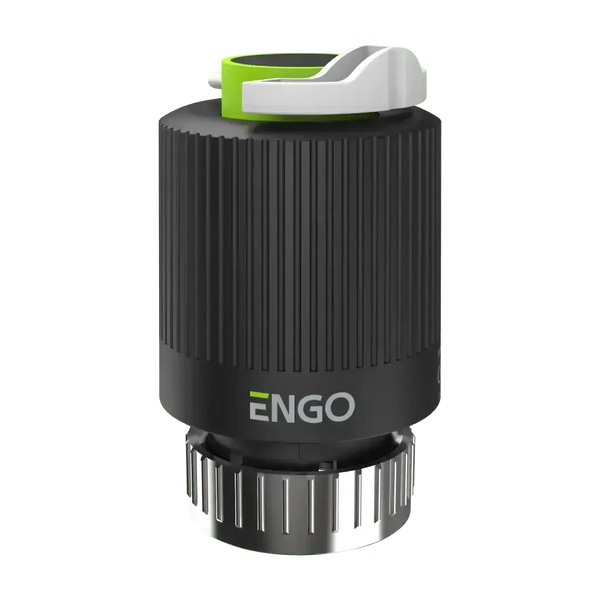
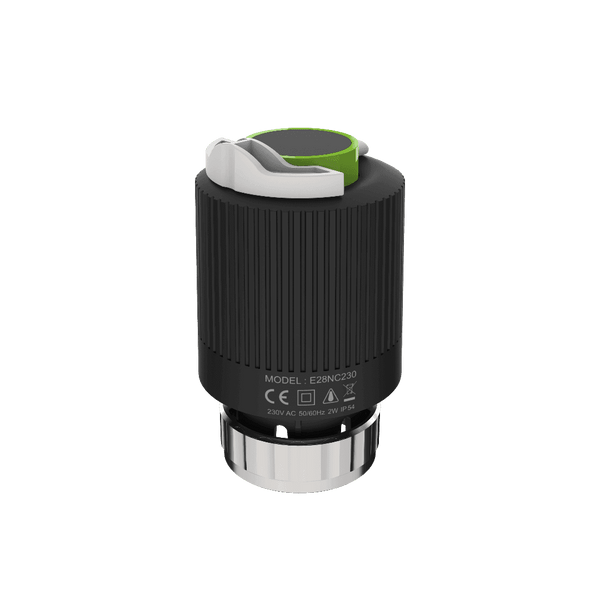
Thermoelectric actuator Engo E30NC-230 for underfloor heating
Actuator
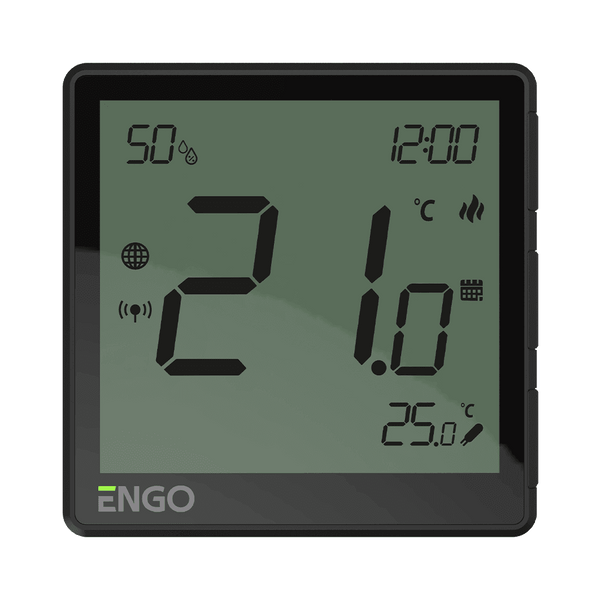
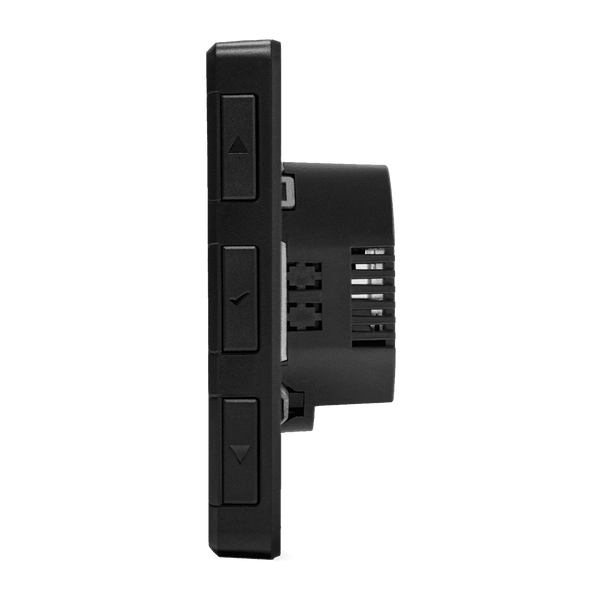
EONE-230V – Smart ZigBee Room Thermostat
thermostat
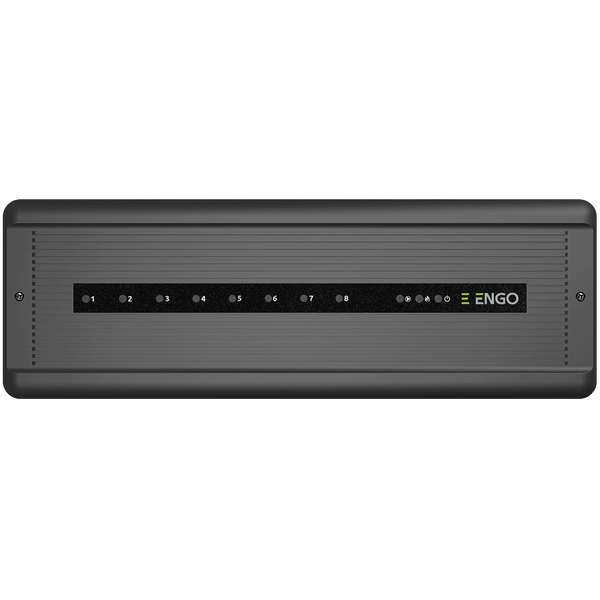
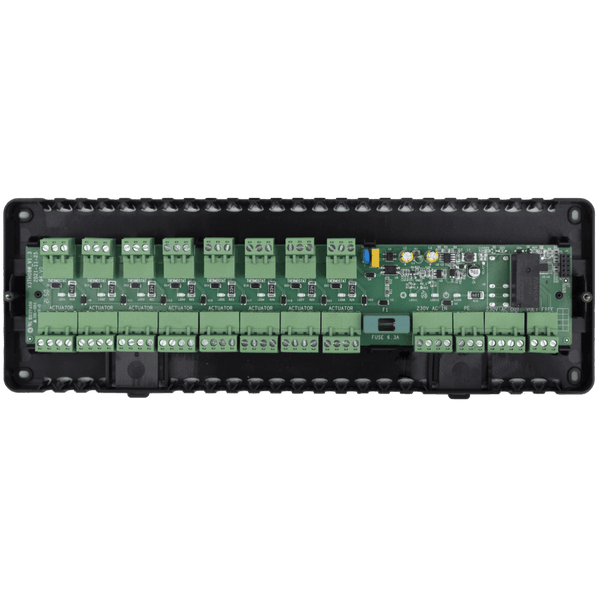
Control terminal strip ECB8-230 V wired 8 zones
Control terminal block
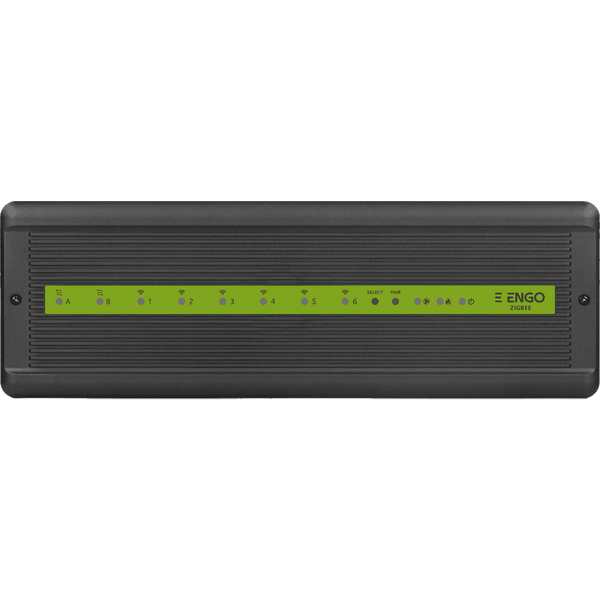
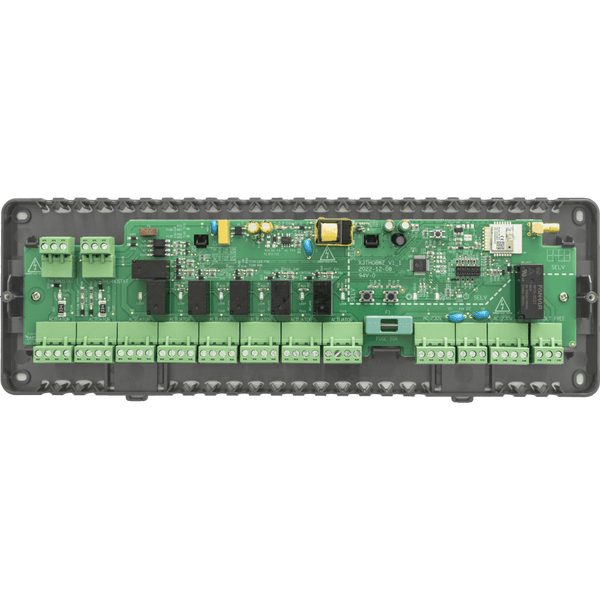
ZigBee control terminal block 8 zones ECB62-ZB
Control terminal block