Requirements for WP-optimized FBH operation
This is what you should check before setup
- →Check the heat pump's flow temperature: Can it be set to 30–35 °C? (hydraulic balancing required)
- →Is individual room control available? GEG § 61 stipulates room control when replacing the heating system
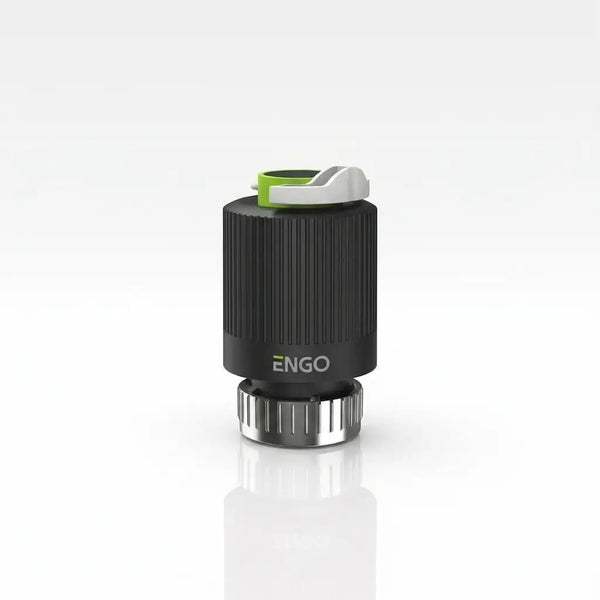
- →Heating manifold with actuators (NC, M30×1.5) for zone-by-zone shut-off, accessible
- →Determine the number of heating circuits/rooms — recommended: 1 thermostat + 1 actuator per room
- →Clarify heat pump type: air-to-water, brine-to-water, or water-to-water — all benefit from low flow temperatures
COP Table: How Flow Temperature Determines Efficiency
The COP (Coefficient of Performance) of a heat pump indicates how much thermal energy is generated per kWh of electricity consumed. The flow temperature is the decisive factor: at 55 °C (radiator level), an air-to-water heat pump typically achieves a COP of 2.5–3.0. At 35 °C (underfloor heating optimum), the COP increases to 4.2–5.0. Every Kelvin reduction in flow temperature improves the COP by approx. 2.5–3 %.
Flow Temperature & Efficiency — Concrete Figures
| Flow Temperature | Application Area | COP (typical) | SCOP (Annual Performance Factor) | Recommendation |
|---|---|---|---|---|
| 30 °C | Underfloor Heating Passive House / KfW 40 | 5.0 – 6.0 | 5.5 – 6.0 | ✓ Optimal |
| 35 °C | Underfloor Heating Insulated House (WSchVO) | 4.2 – 5.0 | 4.5 – 5.5 | ✓ Very Good |
| 40 °C | Underfloor Heating Old Building without Additional Insulation | 3.5 – 4.2 | 3.8 – 4.5 | ○ Good |
| 45 °C | Low-Temp Radiators | 3.0 – 3.5 | 3.2 – 4.0 | ○ Acceptable |
| 55 °C | Standard Radiators | 2.5 – 3.0 | 2.8 – 3.5 | ✗ Uneconomical |
Hydraulic Balancing: Underestimated Efficiency Lever
Without hydraulic balancing, individual heating circuits are over-flowed — the heat pump increases the flow temperature for the worst circuit, all others overheat. Result: SCOP loss of up to 15 %. Solutions:
- Method 1: Manual presetting of the flow valves at the manifold according to heat load calculation according to EN 12831.
- Method 2: Automatic hydraulic balancing by motorised actuators with flow measurement (e.g. ELV motorised).
- ENGO solution: TPI algorithm with ±0.1 °C precision in EONE thermostats approximates balancing through precise pulse width modulation — in practice typically < 5 % deviation.
The Night Setback Trap for Heat Pumps
- KfW 458 (from July 2026): Up to 80 % funding rate for heat pump installation, max. 28,000 € eligible costs — underfloor heating control is an eligible accompanying measure.
- BAFA BEG EM: 15 % (20 % with iSFP) on thermostats & control boxes — can be combined with KfW 458.
- PV Surplus Heating: Smart thermostats enable preheating with surplus solar power (via Tuya automation or Home Assistant) — with 5 kWp PV, approx. 200–400 kWh/year can be used additionally.
Set up WP-Optimized Control in 5 Steps
Step 1: Reduce flow temperature to 30–35 °C: The biggest single measure for heat pump efficiency is lowering the flow temperature. Every degree less improves the COP by approx. 2.5%. At a flow temperature of 35 °C instead of 45 °C, the COP increases from approx. 3.5 to approx. 4.5 — that's 28% less power consumption for the same heating output. Prerequisites: sufficient heating surface in the floor (typically 8–12 W/m² at 30 °C flow), correctly laid heating pipes (15 cm spacing) and hydraulic balancing at the manifold. Engo thermostats with TPI algorithm precisely maintain this low flow temperature without overheating individual rooms.
Step 2: Activate individual room control: Without individual room control, the heat pump heats all rooms simultaneously – rooms that are already warm (south-facing, kitchen with cooking heat) continue to heat up and force the heat pump to operate at a higher output. With Engo ZigBee thermostats in each room, actuators automatically close the warm circuits: the heat pump only supplies the truly cool rooms at a constant low flow temperature. The result: fewer cycles, better COP stability, precise room temperature (±0.5 °C).
Step 3: Adjust night setback for HP accordingly: Gas and oil heating systems allow for night setbacks of 4–6 °C because they heat up quickly. Heat pumps cannot do this: the thermal mass of the underfloor heating (screed, floor structure) takes 3–6 hours to catch up by 4 °C with a heat pump. Too large a setback forces the heat pump into high-temperature operation in the morning – precisely what destroys the COP. Recommendation for heat pumps: night setback max. 2–3 °C, start the heating phase 2–3 hours before waking up. In the Engo EGATE-PRO, these time programs are stored locally and run reliably even without an internet connection.
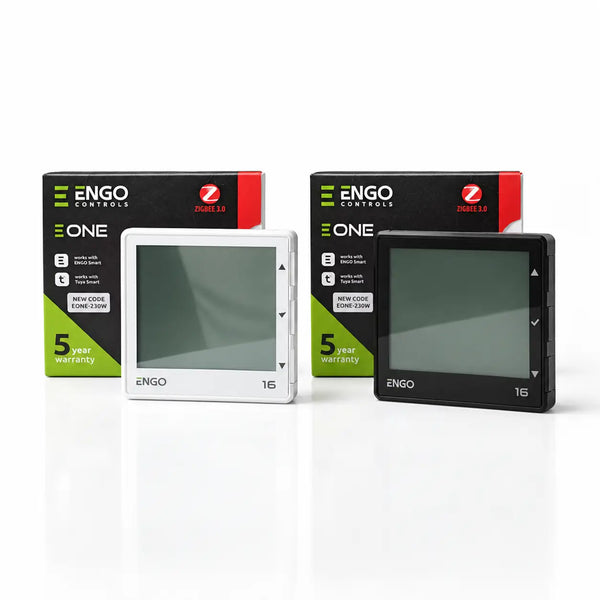
Step 4: Configure the TPI thermostat: All Engo thermostats (Easy-230, EONE, E25) use the TPI (Time Proportional & Integral) algorithm: Instead of simply switching the actuator on/off, TPI modulates the ON-time proportionally to the temperature difference. This means that if the room is 0.5 °C below the setpoint, the actuator only opens briefly—whereas at a 3 °C difference, it opens significantly longer. This is crucial for the heat pump: No abrupt opening of all circuits simultaneously, no pressure surge in the hydraulic system, no unnecessary cycling. TPI keeps the flow temperature stable and the heat pump in efficient continuous operation.
Step 5: Set up ZigBee system & create schedules: The EGATE-PRO Gateway connects all EONE thermostats via ZigBee 3.0 Mesh. Time programs are stored locally on the gateway — no internet needed for heating operation. For heat pump-optimized operation, the following programs are recommended: Living room 20 °C (6:00–22:00), 18 °C (22:00–6:00); Bedroom 17 °C (22:00–6:00), 19 °C (6:00–22:00); Bathroom 22 °C (6:00–8:00, 19:00–21:00), 19 °C otherwise. The Engo Smart App allows changes on the go — e.g., activating vacation mode with frost protection at 12 °C.
COP Comparison & System Data 2026
| Parameter | Value |
|---|---|
| COP at 55 °C flow temperature (standard radiators) | approx. 2.5–3.0 |
| COP at 45 °C flow temperature | approx. 3.2–3.8 |
| COP at 35 °C Flow Temperature (Underfloor Heating Optimum) | approx. 4.0–4.8 |
| Efficiency gain per 1 °C flow temperature reduction | approx. +2.5% COP |
| Ideal Living Room Temperature (HP Mode) | 20 °C |
| Ideal Bedroom Temperature | 62.6–64.4 °F |
| Optimal night setback for heat pump (max. value!) | 2–3°C |
| Control accuracy Engo TPI thermostat | ±0.5 °C |
| Engo EONE-230V ZigBee Thermostat | €64.09 |
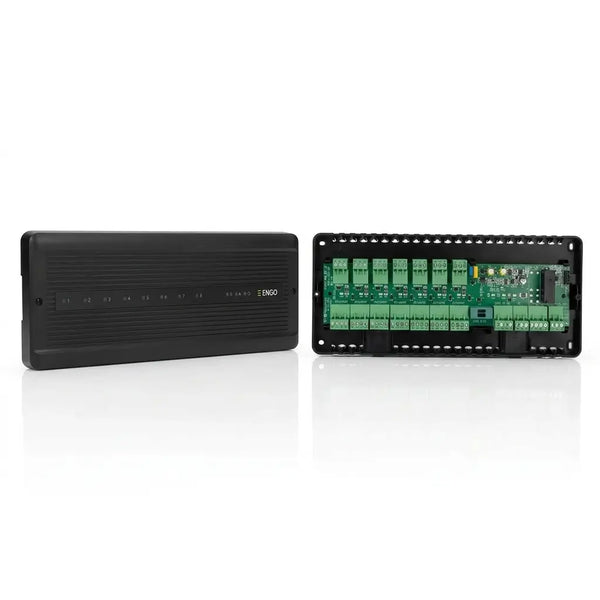
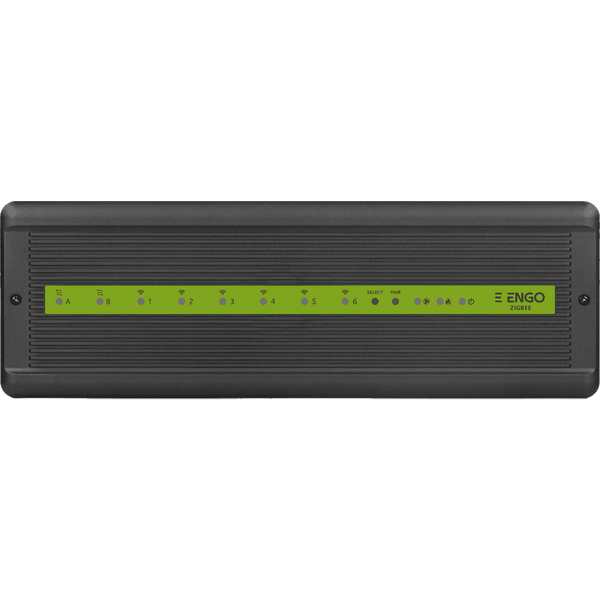
| Engo ECB62-ZB Control Box (8 Zones ZigBee) | €95.43 |
| EGATE-PRO Gateway (Offline Time Programs) | €61.81 |
| Actuator E30NC-230 (per heating circuit) | €9.50 |
| 4-Zone ZigBee Complete System | approx. €380–450 |
| Amortization (30% heat pump efficiency gain) | a heating season |