
What you need for individual room control
The 3 Components
- →Thermostat – one device per heated room; wired Easy-230 from €24.90 or ZigBee EONE-230V from €64.09
- →Actuator E30NC-230 – one per heating circuit on the manifold (€9.50, thread M30×1.5, 230V NC-type)
- →Control box ECB8-230V – controls up to 8 zones, located at the distribution box (€54.43)
- →For ZigBee: EGATE-PRO Gateway – once per household, all thermostats via app (€61.81)
Check prerequisites at the distributor
- →Underfloor heating with heating manifold available (screed box or wall box accessible)
- →Check voltage at the distributor: 230V living areas (standard), 24V wet rooms – Actuators must match
- →Determine the number of heating circuits – one actuator and one thermostat required per zone
- →Clarify cable route from thermostat mounting location to distribution box (necessary for wired systems)
How do wired, WiFi, and ZigBee systems differ?
Wired thermostats (Easy-230, ESimple) communicate with the control box via a 2-wire cable — reliable, inexpensive, 100% offline. WiFi thermostats connect directly to the home router and a cloud app (Tuya) via 2.4 GHz WiFi — no gateway needed, but cloud dependence for app functions. ZigBee thermostats (EONE) form a self-healing mesh network to the EGATE-PRO Gateway — highest reliability and offline security, but a one-time gateway investment.
The Control Loop Principle: Thermostat → Control Box → Actuator
Compare setpoint
Signal to control box
1 per apartment
up to 8 zones
1 per heating circuit
opens valve
heats the room
How many thermostats do I need?
Rule of thumb: 1 thermostat = 1 zone = at least 1 heating circuit. Multiple heating circuits in a room can be connected to a common thermostat if they form a thermal unit:
| Example | Heating Circuits | Thermostats | Control Boxes |
|---|---|---|---|
| 3-room apartment | 3–5 circuits | 3 (1 per room) | 1 × ECB8-230V |
| 4-room + bathroom | 5–7 circuits | 4–5 | 1 × ECB8-230V |
| Single-family house 6 rooms | 8–12 circuits | 6 | 1 × ECB8-230V (8-zone) |
| Single-family house > 8 rooms | 12–20 circuits | 8–10 | 2 × ECB8-230V or 1 × ECB62-ZB |
Individual Room Control & Heat Pump: Particularly Important
How individual room control works: the control loop principle
Step 1: Thermostat measures room temperature and signals demand: Each thermostat is located in the room it is meant to control – at a wall height of approx. 1.5 m, not behind curtains, and not above radiators. It continuously compares the actual and target temperatures. If the room temperature falls below the target value, it sends a heating signal to the control box.
Step 2: Control box coordinates all zones simultaneously: The control box (ECB8-230V for up to 8 zones) is located at the heating circuit distributor and receives signals from all thermostats. Each zone is evaluated separately: Room 1 requires heat → Zone 1 opens; Room 2 is warm enough → Zone 2 remains closed. All rooms are controlled in parallel and independently of each other.
Step 3: Actuator opens or closes the heating circuit: The E30NC-230 actuator is mounted on the valve of the heating circuit distributor. NC = Normally Closed: closed without power (heating circuit cold), open with power (heating water flows). If the power fails, all circuits close automatically – a safety standard for underfloor heating systems.
Step 4: Underfloor heating heats to the exact target temperature: Once the heating circuit is open, heating water flows into the floor of the room. The floor temperature rises, the thermostat registers the air heating and closes the heating circuit again when the set temperature is reached. Result: room-specific control with deviations below ±0.5 °C – no overheating, no underheating.
Cost of individual room control for underfloor heating 2026
| Component | Price |
|---|---|
| Actuator E30NC-230 (per zone) | €9.50 |
| Wired Thermostat Easy-230 (per room) | €24.90 |
| Wired control box ECB8-230V (up to 8 zones) | €54.43 |
| 4-zone wired complete | approx. €192 |
| Thermostat ZigBee EONE-230V (per room) | €64.09 |
| ZigBee Control Box ECB62-ZB (up to 8 zones) | €95.43 |
| EGATE-PRO Gateway (one-time per household) | €61.81 |
| 4-zone ZigBee complete | approx. €380–450 |
Frequently Asked Questions about Individual Room Control
Thermostats, Actuators & Control Boxes
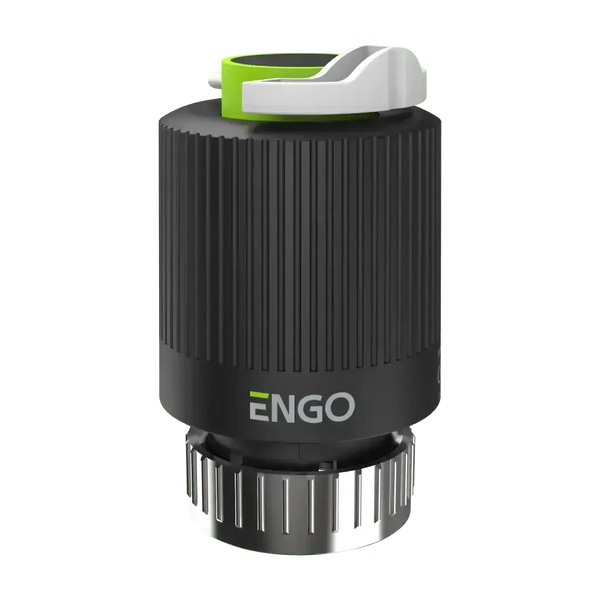
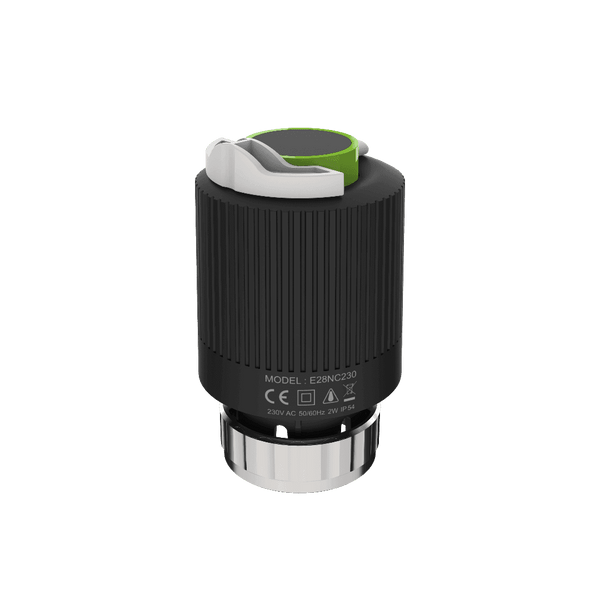
Thermoelectric actuator Engo E30NC-230 for underfloor heating
Actuator
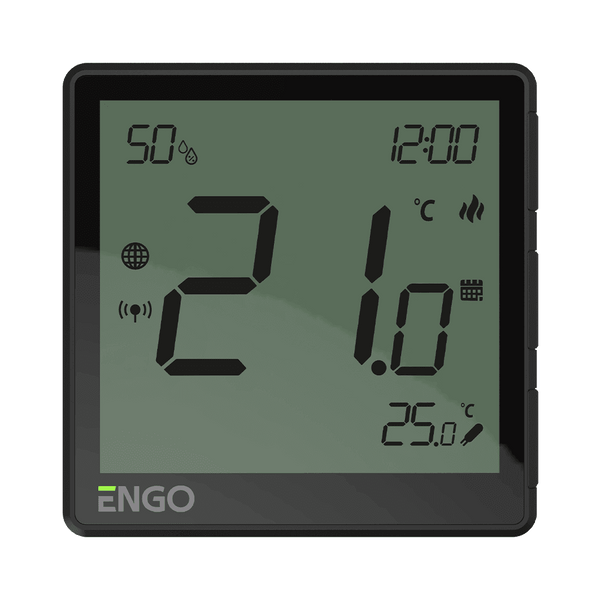
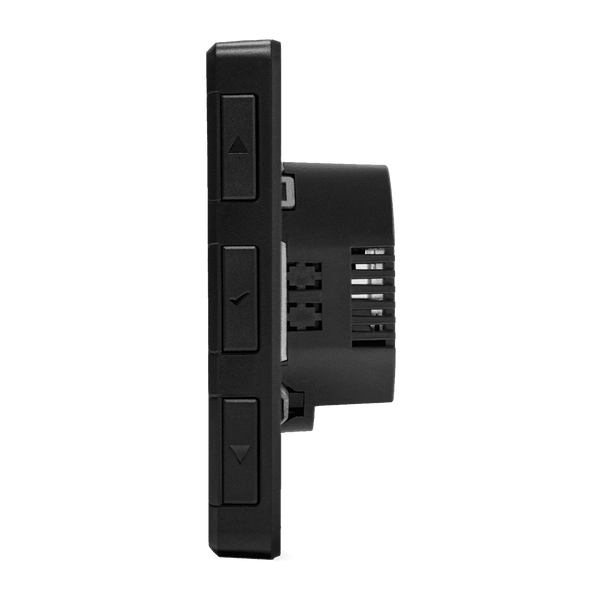
EONE-230V – Smart ZigBee Room Thermostat
thermostat
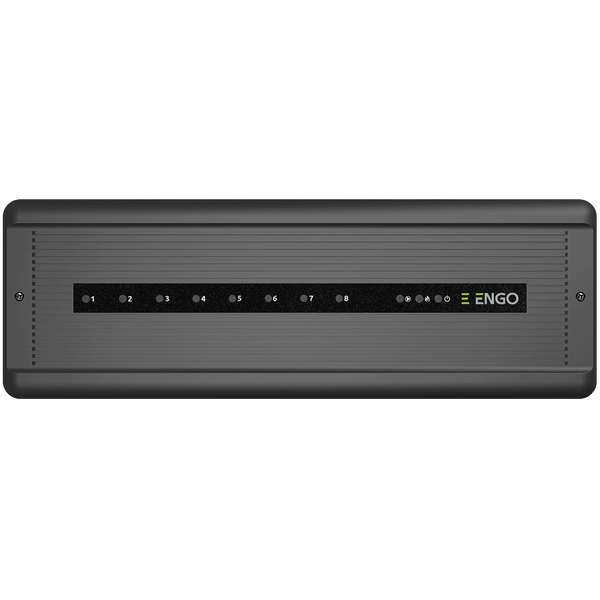
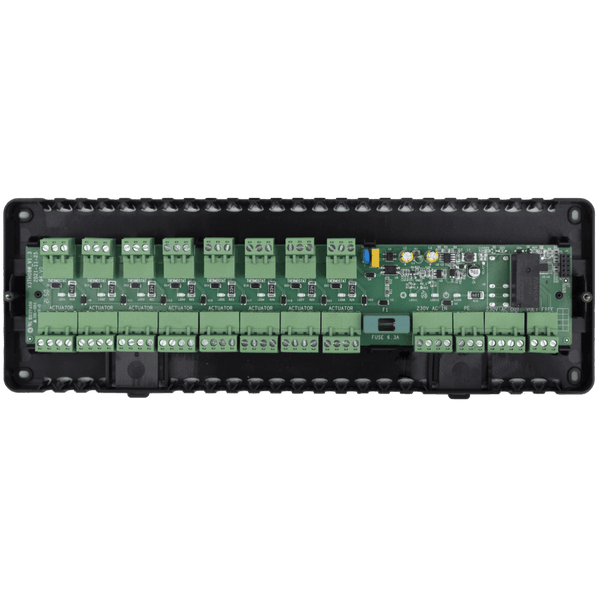
Control terminal strip ECB8-230 V wired 8 zones
Control terminal block
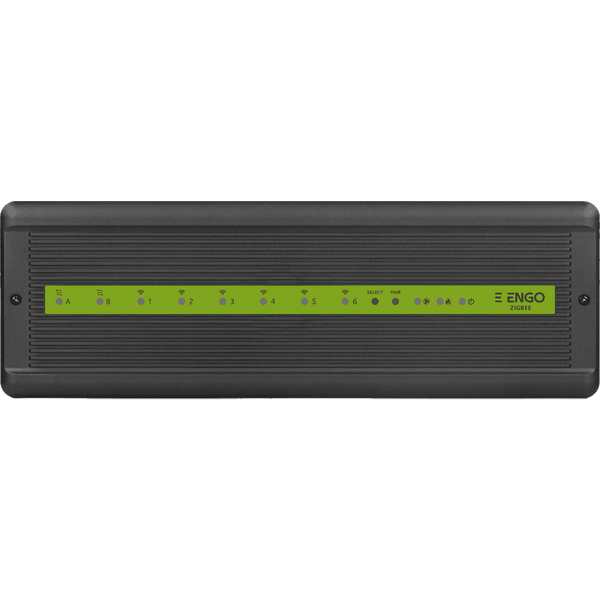
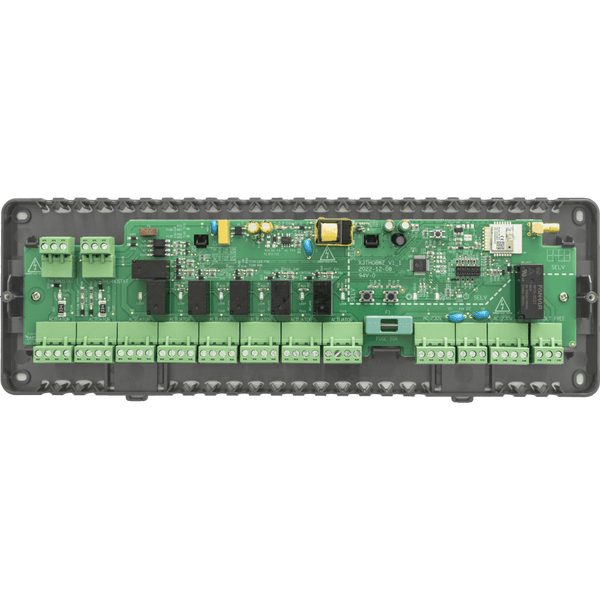
ZigBee control terminal block 8 zones ECB62-ZB
Control terminal block